
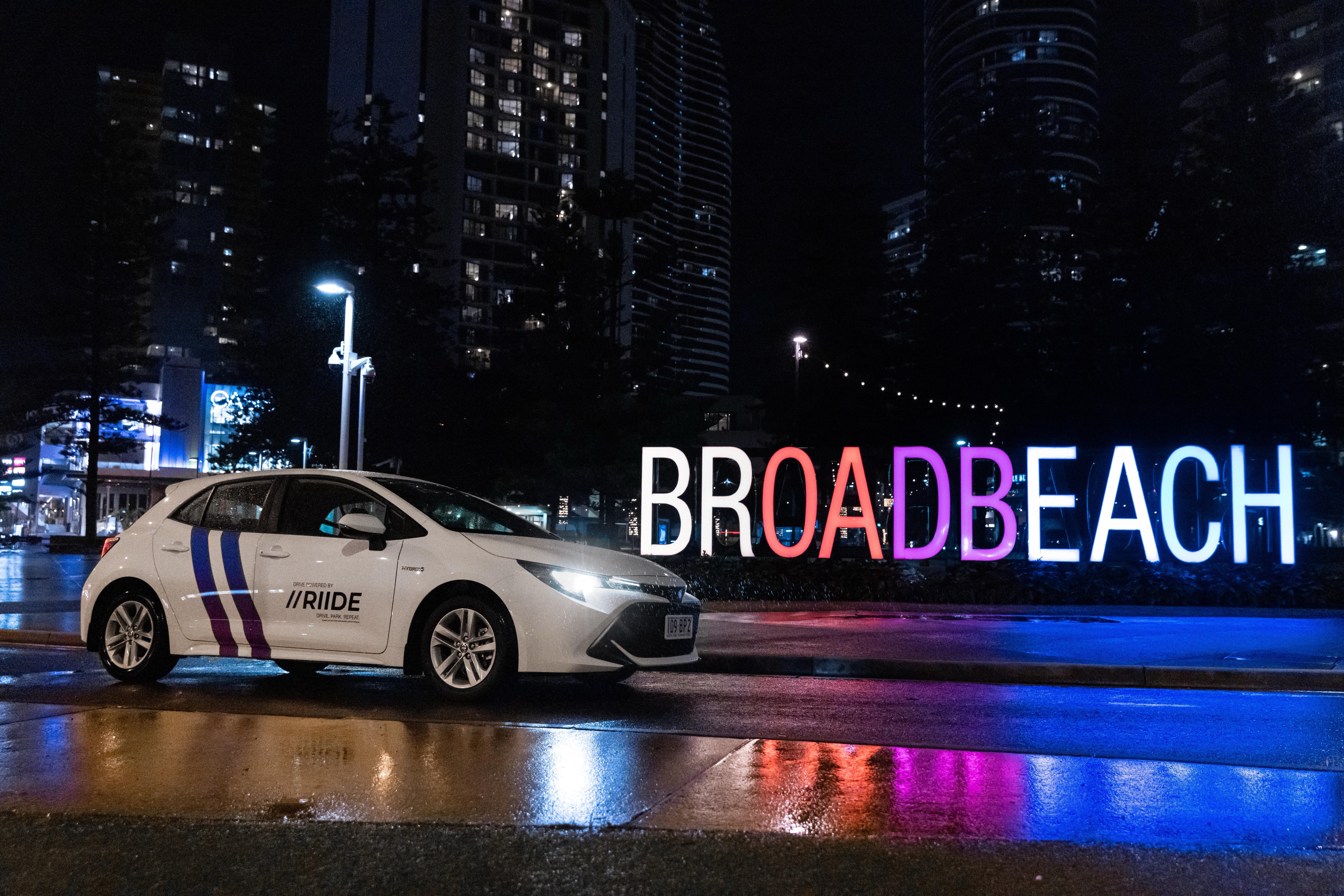
RIIDE car at Broadbeach, Gold Coast, QLD.
Gold Coast free-floating car-share opens to 18–20-year-old P2 drivers after 30,000+ trips, with fuel and basic cover included.
Dropping the minimum age to 18 gives students, apprentices and young workers an affordable way to get around without owning a car. We’ll keep standards high with ID checks and clear rules.”
— Ricards Staks, CEO, RIIDE Pty Ltd.
GOLD COAST, QLD, AUSTRALIA, September 25, 2025 /EINPresswire.com/ -- RIIDE, the Gold Coast’s free-floating (“drive-and-drop”) car-share service, is opening access to 18–20-year-olds holding a P2 (Green Ps) licence, reducing its minimum age from 21. The change follows RIIDE surpassing 30,000 trips since launch, reflecting strong local demand for affordable, flexible mobility. 
“Dropping the minimum age to 18 gives students, apprentices and young workers a fair,
How it works: members locate, unlock and drive hybrid cars via the RIIDE app, then end trips within a designated home-zone with fuel included. Usage has been consistent around Griffith University precincts since early 2023, where a floating model offers on-demand access without the cost or admin of a full-day rental. 
External perspective: “RIIDE is a real solution for students who arrive car-free… it’s perfect for less frequent trips,” said Professor Matthew Burke, Cities Research Institute, Griffith University (as quoted by Griffith University News). 
Key facts
• Minimum age lowered from 21 to 18 for P2, effective 25 September 2025. 
• 30,000+ trips completed across the Gold Coast. 
• Fuel and basic insurance included in every trip.
The change to allow eligible P2 drivers reflects two trends on the Gold Coast: a growing student population and the broader cost-of-living squeeze. By lowering barriers to access, RIIDE aims to support younger drivers who need safe, occasional access to a car for work, study and life admin, while maintaining strong safety and accountability standards.
Safety and standards
• Eligibility: The update applies to drivers aged 18–20 holding a current P2 (Green Ps) licence. All standard terms continue to apply.
• Verification: Members complete identity and licence checks before their first trip.
• Community rules: Clear guidance covers parking, cleanliness, refuelling and respectful use.
• Technology: Telematics, geofencing and app-based controls help protect vehicles and keep trips running smoothly.
• Support: Help is available for members who run into issues during a booking.
Why free-floating matters
Free-floating car-share complements public transport, cycling and walking by filling the “sometimes I need a car” gap. It enables shorter bookings, reduces unnecessary cruising for parking by allowing an end-trip near the destination within the home-zone, and makes better use of vehicles by keeping them in circulation across the city. For local businesses, it offers a flexible way to access a car without a long-term fleet commitment. For residents and students, it provides the convenience of a car when needed, without the ongoing costs of ownership.
How pricing works
Members only pay for what they use, with simple options to pay by the minute or by the day. Fuel is included, and daily bookings include a kilometre allowance with a clear per-kilometre rate beyond that. Exact rates and allowances are listed on the RIIDE website. Additional damage excess may apply for P2 licence holders and for drivers aged 18–20, as outlined in pricing and member terms.
Independent observers have pointed to the benefits of flexible, on-demand car access for students and staff who don’t need a car every day. As Griffith University’s Cities Research Institute has previously noted, services like RIIDE can provide a useful option for people who arrive on campus car-free or who only require occasional access to a vehicle.
No comments:
Post a Comment